In-vitro skin irritation testing for medical devices
Skin irritation testing according to ISO 10993-23 is conducted using the EpiDerm model, which utilizes Reconstructed Human Epidermis (RhE). This method replaces ISO 10993-10, which relied on animal models, aligning with ethical considerations regarding animal testing.
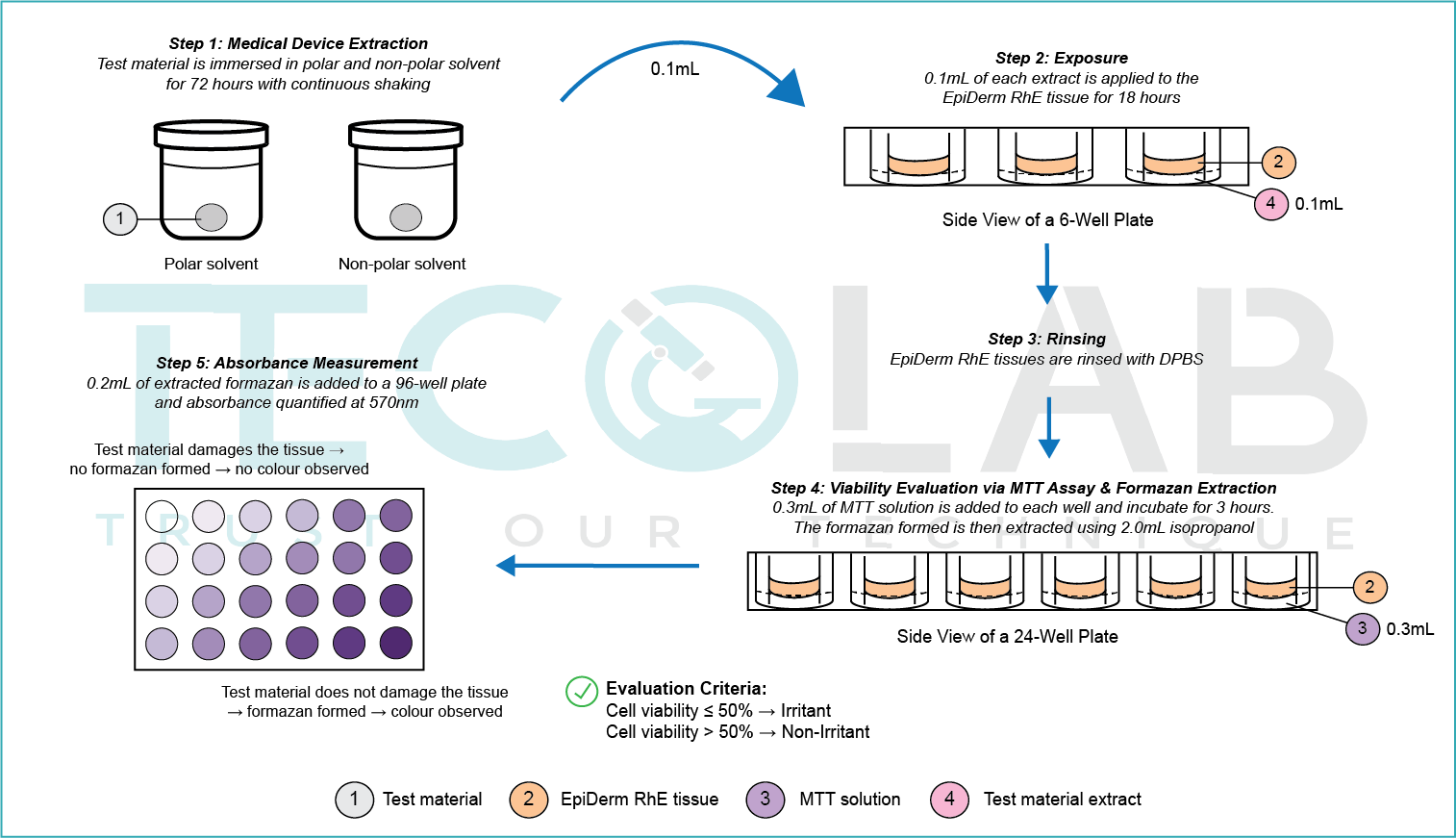
The diagram below provides a summary of the test method according to ISO 10993-23.
ISO 10993-23 is designed for skin irritation testing of medical devices. For biocides, chemicals, and cosmetics, OECD 439 is an alternative method for skin irritation testing.
Extraction Conditions
The general extraction condition is 37°C for 72 hours. The medical device is extracted separately using the following extraction vehicles:
0.9% saline: Polar solvent
Sesame oil: Non-polar solvent
For medical devices intended for short-term contact with intact skin or mucosa and not intended for implantation, extraction times may range from 4 to 24 hours, depending on the applicable testing requirements.
Test Protocol
Step 1: Test material is immersed in polar and non-polar solvent for 72 hours with continuous shaking.
Step 2: 0.1 mL of each extract is applied to the EpiDerm RhE tissue for 18 hours.
Step 3: EpiDerm RhE tissues are rinsed with DPBS.
Step 4: 0.3 mL of MTT solution is added to each well and incubated for 3 hours. The formazan formed is then extracted using 2.0 mL isopropanol.
Step 5: 0.2 mL of the extracted formazan solution is transferred to a 96-well plate, and the absorbance is measured at 570 nm.
Passing Criteria
The test results are evaluated based on cell viability:
Irritant (I): Cell viability is ≤ 50%.
Non-Irritant (NI): Cell viability is > 50%.
**Disclaimer: NO ANIMAL TESTING. TECOLAB is committed to ethical and cruelty-free testing practices. We do not conduct any form of testing on animals and all our biocompatibility tests are performed on in-vitro models.
Need help with your testing requirements?
Have questions about this test method or your product? Our technical team is here to assist you.


 Deutsch
 中文
 日本語
 Português
 Français
 Español
 العربية