In-vitro skin irritation testing for biocides, chemicals and cosmetics
Skin irritation testing is performed using the EpiDerm model, which utilizes Reconstructed Human Epidermis (RhE). This method follows OECD 439, an internationally recognized guideline for assessing the skin irritation potential of biocides, chemicals, and cosmetics—without the need for animal testing.
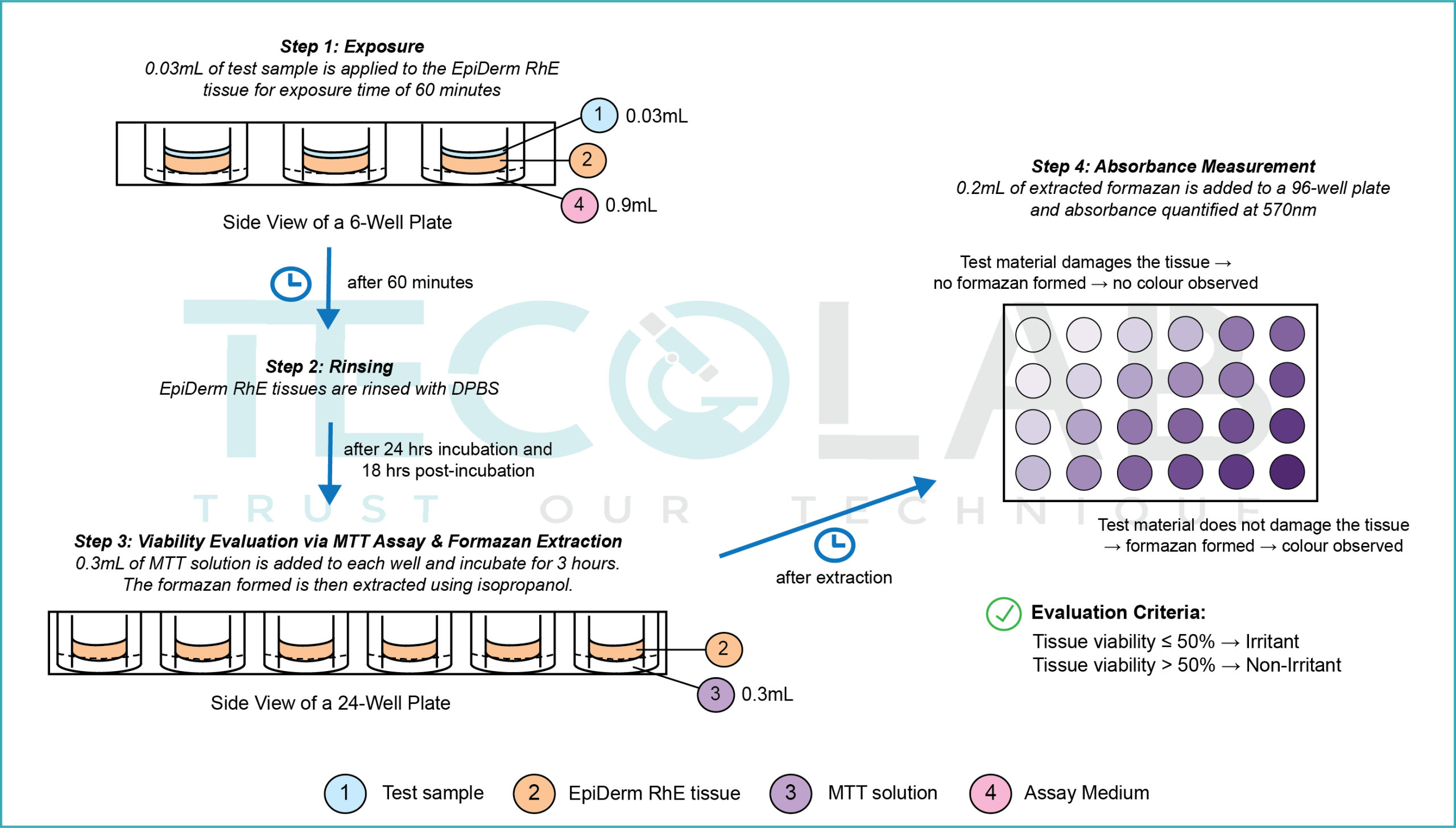
The diagram below provides a summary of the test method according to OECD 439.
OECD 439 is designed for the hazard identification of skin-irritant chemicals, biocides, and cosmetics. For medical devices, ISO 10993-23 is the relevant standard for skin irritation testing.
Test Protocol
Step 1: 0.03 mL of the test sample is applied to the EpiDerm RhE tissue for exposure time of 60 minutes.
Step 2: The EpiDerm RhE tissues are rinsed with DPBS.
Step 3: 0.3 mL of MTT solution is added to each well and incubated for 3 hours. The formazan formed is then extracted using isopropanol.
Step 4: 0.2 mL of the extracted formazan solution is transferred to a 96-well plate, and the absorbance is measured at 570 nm.
Exposure Time and Conditions
The test substance is applied directly to the Reconstructed Human Epidermis (RhE) for 60 minutes at 37°C. After exposure, the tissue is rinsed and incubated for 42 hours under standard cell culture conditions.
Passing Criteria
The test results are evaluated based on cell viability after 42 hours of post-exposure incubation:
Irritant (I): Cell viability is ≤ 50%.
Non-Irritant (NI): Cell viability is > 50%.
**Disclaimer: NO ANIMAL TESTING. TECOLAB is committed to ethical and cruelty-free testing practices. We do not conduct any form of testing on animals and all our biocompatibility tests are performed on in-vitro models.
Need help with your testing requirements?
Have questions about this test method or your product? Our technical team is here to assist you.


 Deutsch
 中文
中文
 日本語
日本語
 Português
 Français
 Español
 العربية