Microbiological examination of nonsterile products: Tests for specified microorganisms
USP <62> is a United States Pharmacopeia test used for the detection of specified microorganisms in nonsterile pharmaceutical products, raw materials, cosmetics, and other applicable products. The test is a qualitative microbial examination used to detect specified microorganisms that may pose a risk to product safety and quality.
The microorganisms tested may include Staphylococcus aureus, Pseudomonas aeruginosa, Escherichia coli, Salmonella spp., Clostridium spp., Candida albicans, and Gram-negative bacteria such as Pluralibacter gergoviae.
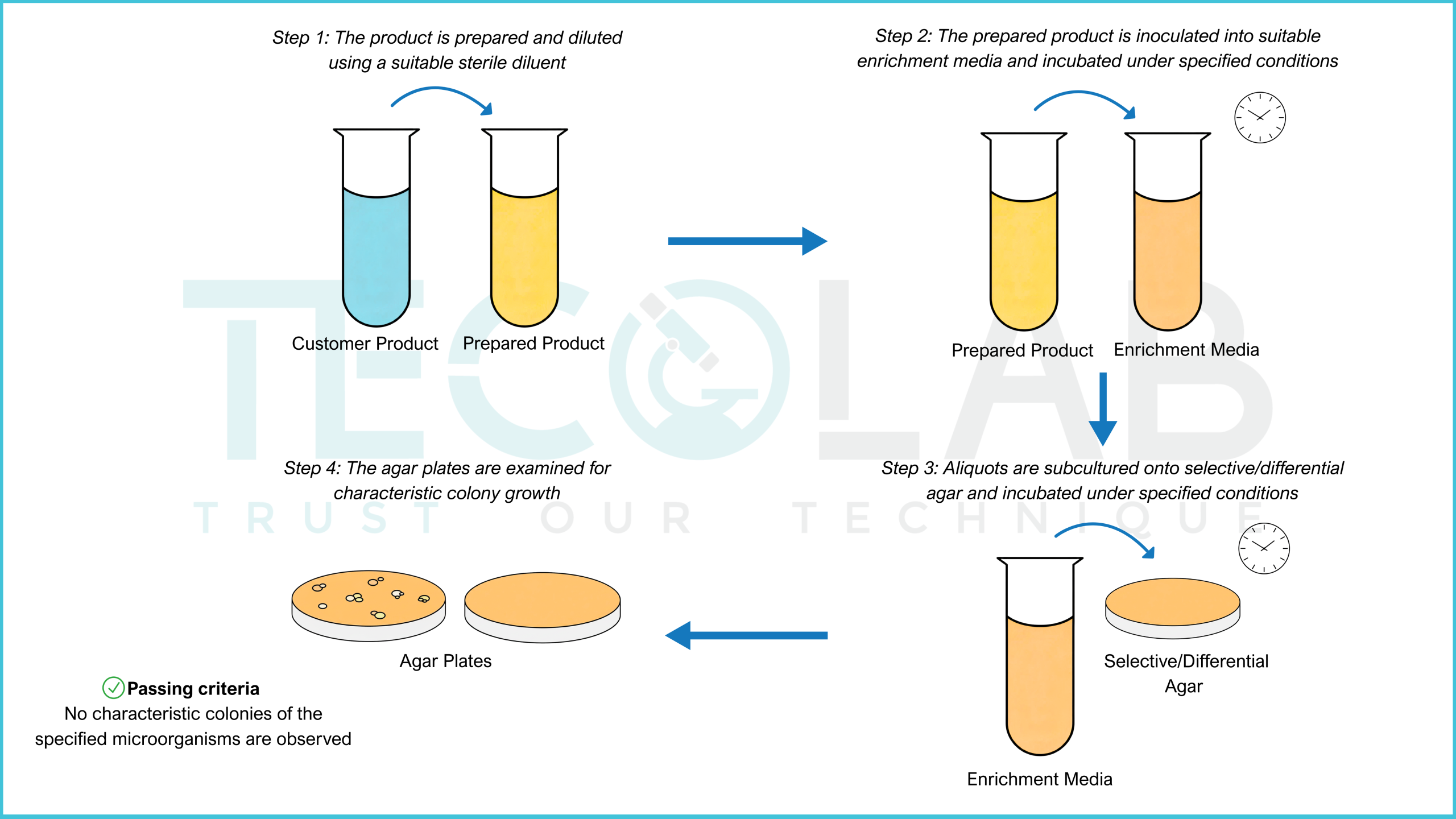
The infographic below provides a brief overview of the USP <62> test method.
The specific microorganisms tested depend on the applicable USP <62> requirements and the product being evaluated.
Test Protocol
Step 1: Prepare the Test Product The customer product is prepared and diluted using a suitable sterile diluent according to its characteristics.
Step 2: Enrich the Test Sample The prepared product is inoculated into suitable enrichment media and incubated under specified conditions to promote the recovery of the target microorganism, if present.
Step 3: Isolate the Target Microorganism Following enrichment, aliquots of the culture are subcultured onto suitable selective or differential agar media. The agar plates are then incubated under specified conditions to support the detection of the target microorganism.
Step 4: Examine the Results Following incubation, the agar plates are examined for characteristic colony growth associated with the target microorganism.
Where required, suspected colonies may be subjected to further identification or confirmation according to the applicable test procedure.
Acceptance Criteria
The product complies with the applicable USP <62> requirement when the specified microorganism is not detected in the quantity of product tested, subject to the applicable test procedure and confirmation requirements.
Need help with your testing requirements?
Have questions about this test method or your product? Our technical team is here to assist you.


 Deutsch
 中文
中文
 日本語
日本語
 Português
 Français
 Español
 العربية