Microbiological Examination of Nonsterile Products – Tests for Burkholderia Cepacia Complex
USP <60> is a United States Pharmacopeia standard used to detect Burkholderia cepacia complex (Bcc) in nonsterile pharmaceutical and personal care products. The test helps identify potentially objectionable microorganisms that may affect product safety and quality, supporting compliance with microbiological requirements.
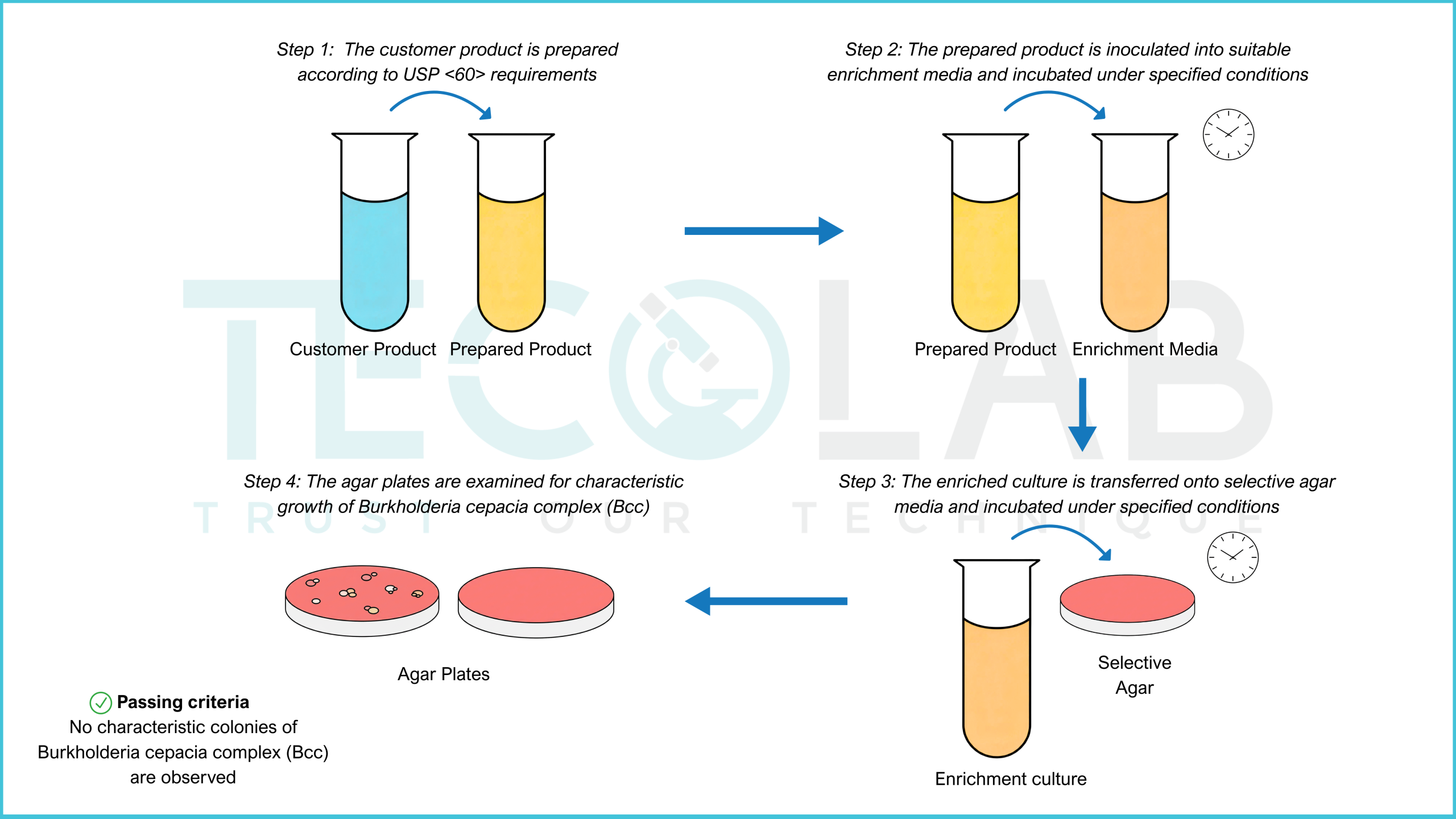
The infographic below provides a brief overview of the USP <60> test method.
USP <60> is applicable to nonsterile pharmaceutical products and other relevant products, such as personal care products, where detection of Burkholderia cepacia complex (Bcc) is required.
The test is used to detect Burkholderia cepacia complex, a group of microorganisms that may present a microbiological safety concern in susceptible products.
Typical applications include:
Nonsterile pharmaceutical products
Aqueous pharmaceutical preparations
Water-based personal care products
Other applicable nonsterile products requiring Bcc detection
The test requirements and acceptance criteria should be determined according to the applicable USP <60> requirements and the product being tested.
Test Microorganisms
USP <60> focuses on the detection of Burkholderia cepacia complex (Bcc).
Bcc is detected using enrichment and selective culture techniques to support the recovery and identification of the target microorganism.
Test Protocol
Step 1: Prepare the Test Sample The customer product is prepared and diluted according to the applicable USP <60> requirements to facilitate the detection of Burkholderia cepacia complex (Bcc).
Step 2: Enrich the Sample The prepared sample is inoculated into Soybean–Casein Digest Broth (SCD) and incubated at 30–35°C for 48–72 hours to promote the recovery of Bcc, if present.
Step 3: Detect Bcc on Selective Agar Following enrichment, the culture is streaked onto Burkholderia cepacia Selective Agar (BCSA) and incubated at 30–35°C for 48–72 hours for selective detection.
Step 4: Examine the Results The BCSA plates are examined for characteristic colonies associated with Burkholderia cepacia complex (Bcc).
Step 5: Evaluate the Results The test results are evaluated according to the applicable USP <60> requirements. The product complies with the specified acceptance criterion when no characteristic colonies of Burkholderia cepacia complex (Bcc) are observed on the selective agar, subject to confirmation and the applicable test procedure.
Need help with your testing requirements?
Have questions about this test method or your product? Our technical team is here to assist you.


 Deutsch
 中文
中文
 日本語
日本語
 Português
 Français
 Español
 العربية