Quantitative Carrier Test for the Evaluation of Mycobactericidal or Tuberculocidal Activity of Chemical Disinfectants Used for Instruments in the Medical Area
EN 14563 is an essential European Standard used to evaluate the minimum mycobactericidal or tuberculocidal activity requirements of instrument disinfectant used in the medical area.
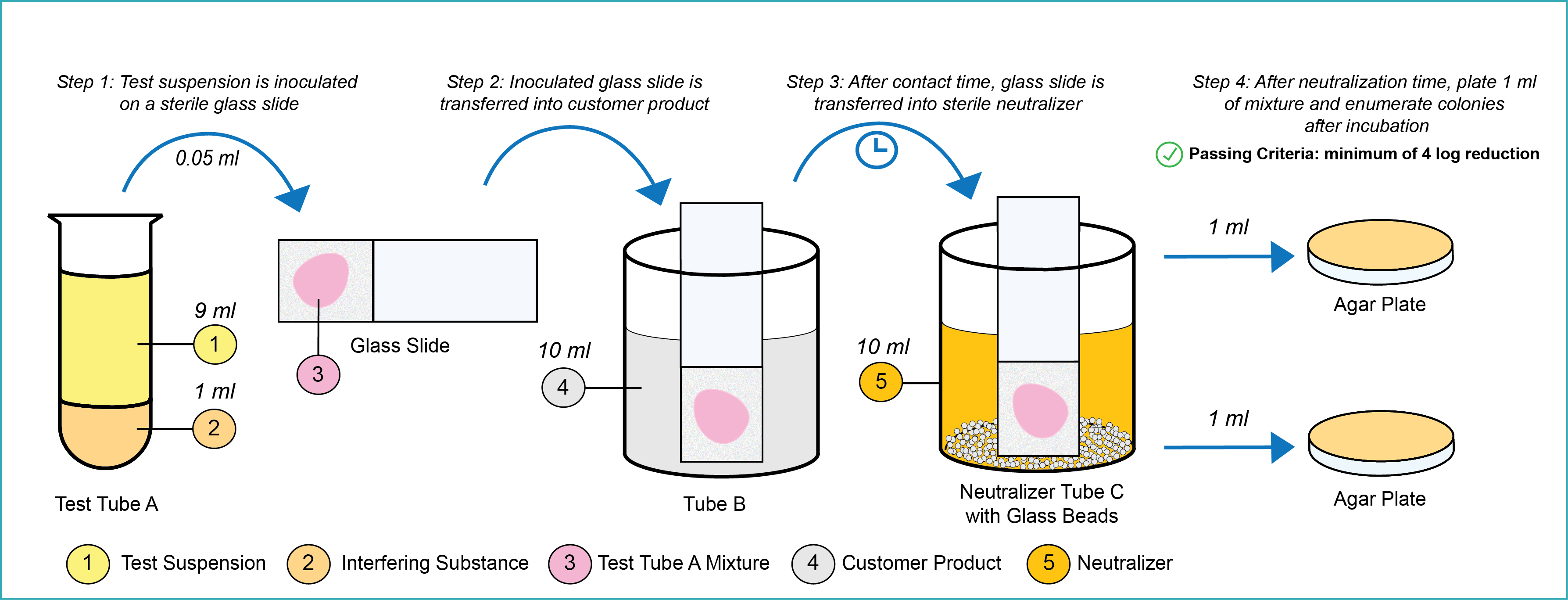
The infographic below provides a brief overview of the EN 14563 test method.
This test method is applicable to instrument disinfectants used in the medical area for evaluating mycobactericidal or tuberculocidal activity.
Test Protocol
Step 1: The test suspension is inoculated onto a sterile glass slide and allowed to dry.
Step 2: The inoculated glass slide is immersed in the customer product for the selected contact time.
Step 3: After the contact time, the glass slide is transferred into a sterile neutralizer to stop the disinfectant activity and recover the surviving microorganisms.
Step 4: After the required neutralization time, 1 mL of the neutralized mixture is plated and incubated. Surviving microbial colonies are then enumerated to determine the log reduction.
The test protocol is performed under the specified conditions according to the product category, intended application, contact time and test conditions.
Test Microorganisms
These are the minimum test organisms:
Mycobacterium avium (not required if testing for tuberculocidal efficacy only)
Mycobacterium terrae
Contact Time & Concentration
The test concentration is chosen according to the manufacturer’s recommendation.
The minimum contact time to be tested is 60 minutes. However, the manufacturer can test a shorter contact time, including 5, 15, and 30 minutes.
Soiling Conditions
Interfering substances, or commonly referred to as soiling, are used to mimic organic substances found on human skin, surfaces, and instruments. These are the available soiling conditions according to the test method:
Clean condition: 0.3 g/L bovine serum albumin
Dirty condition: 3.0 g/L bovine serum albumin and 3.0 mL/L sheep erythrocytes
Need help with your testing requirements?
Have questions about this test method or your product? Our technical team is here to assist you.


 Deutsch
 中文
 日本語
 Português
 Français
 Español
 العربية