If you are developing a product with an anti-dandruff or seborrheic dermatitis-related claim, an important question is:
What microorganisms are associated with dandruff and seborrheic dermatitis?
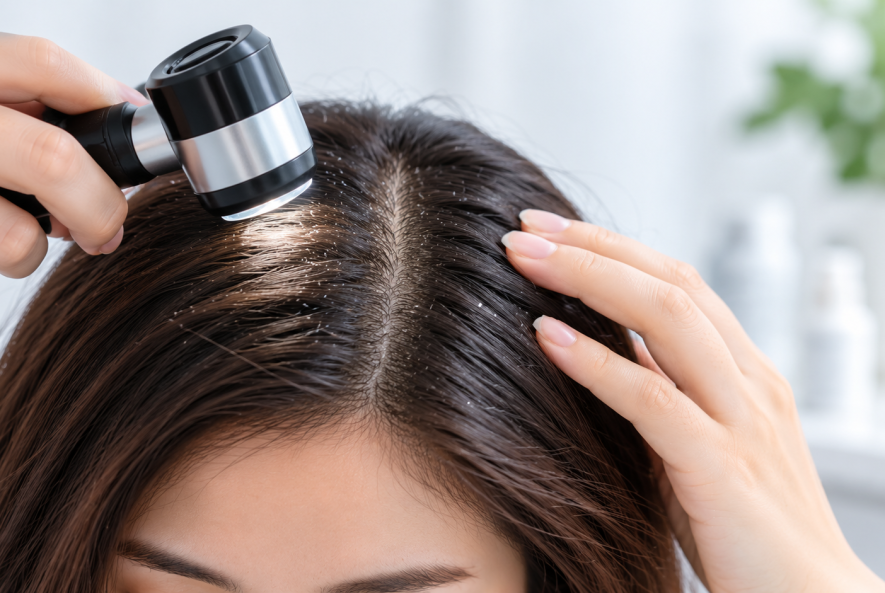
Dandruff and seborrheic dermatitis are influenced by several factors, including the scalp environment, sebum, and microorganisms naturally present on the skin.
Among these microorganisms, Malassezia species naturally reside on the skin and have been implicated in exacerbating inflammation and triggering immune responses, thereby contributing to the initiation and progression of seborrheic dermatitis and dandruff.
So, if you are developing a product intended to address these concerns, could testing against a representative Malassezia species provide useful information about your product?
One possible approach is to evaluate the product’s activity against Malassezia furfur as a selected test organism.
Why Consider Malassezia furfur?
Malassezia furfur is a lipophilic yeast found on human skin and is one of the Malassezia species that may be considered when evaluating activity against this group of microorganisms.
M. furfur is also associated with the scalp and conditions such as dandruff and seborrheic dermatitis. Therefore, it can be selected as a representative Malassezia species to evaluate whether a test product shows activity against the selected yeast under defined laboratory conditions.
How Can the Product Be Tested?
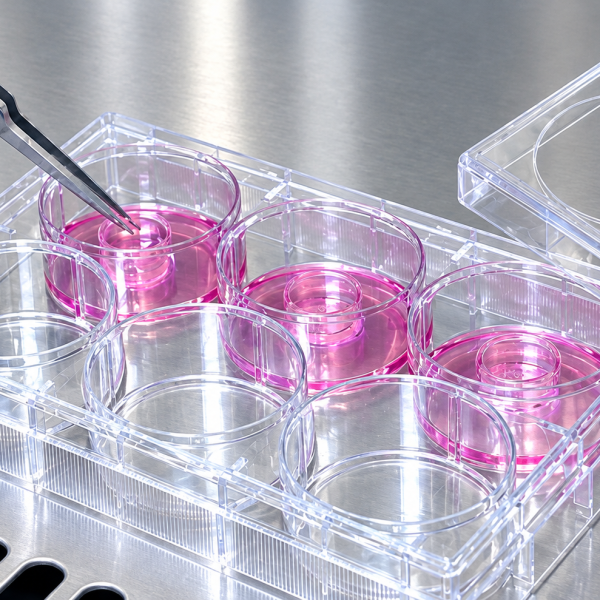
A quantitative suspension test based on the principles of EN 1650 can be used to evaluate the activity of an anti-dandruff product against a selected Malassezia species. The test can be adapted by using M. furfur as the test organism and selecting suitable test conditions based on the intended use of the product.
The test can include a suitable interfering substance, such as bovine serum albumin (BSA), to simulate the presence of organic material during testing.
For shampoo products, a 50% product dilution may be used to simulate dilution with water during normal use. A 30 to 60 second contact time may also be considered to simulate the short contact period of a rinse-off shampoo.
These conditions are intended to make the laboratory evaluation more representative of the product’s actual use. The final test conditions should be determined based on the product, its intended use, and the objectives of the study.
But Can the Test Results Support an Anti-Dandruff Claim?
Potentially, yes
but it depends on the applicable regulatory requirements and the overall claim strategy.
Microbiological testing can provide supporting evidence that a product has activity against a microorganism associated with the intended claim.
However, showing activity against one microorganism does not, by itself, prove an anti-dandruff or seborrheic dermatitis claim.
Whether the data is sufficient to support a claim can depend on factors such as:
The product
The specific claim
The target market
Applicable regulatory requirements
Other supporting evidence available for the product
Therefore, microbiological testing can be one part of the overall evidence used to support a product claim.
How Can TECOLAB Help?
At TECOLAB, we support manufacturers and product developers in developing microbiological testing strategies for antimicrobial and antifungal evaluations.
Malassezia furfur ATCC 14521 is available as one of our test organisms, allowing us to support targeted evaluations of product activity against this skin-associated yeast.
If you are developing an anti-dandruff, scalp-care, or seborrheic dermatitis-related product, our team can discuss your product, intended claim, and testing objectives to help determine a suitable testing approach.
Have a Product You Would Like to Evaluate?
Talk to our team about your product and microbiological testing needs.
References:
Wasim, I., Mondal, N. S., Dey, J., Saikia, L., Law, D., Sen, S., Gautam, M. K., & Dutta, P. P. (2026). Seborrheic dermatitis and dandruff: An overview of pathogenesis, role of Malassezia spp., and natural treatment approaches. Journal of Medical Mycology, 36(1), 101604. Retrieved from https://www.sciencedirect.com/science/article/abs/pii/S1156523326000053


 Deutsch
 中文
 日本語
 Português
 Français
 Español
 العربية