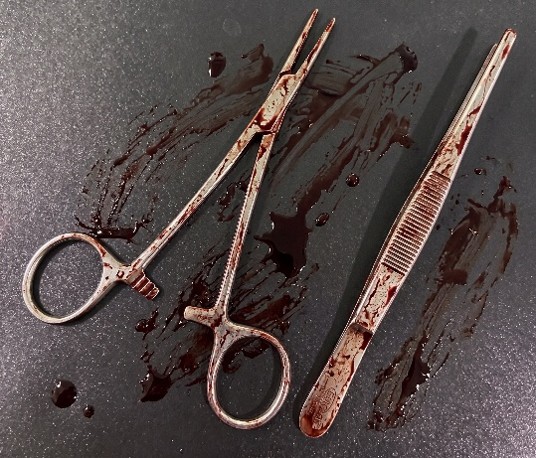
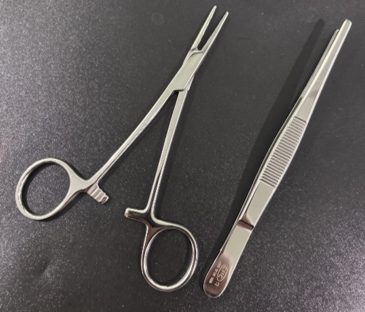
Imagine a stainless-steel surgical instrument or a flexible endoscope coming out of the washer-disinfector. It looks clean. There is no visible debris, no staining, and no residue that you can see.
But does that mean it is actually clean?
Not necessarily.
Small amounts of proteins, lipids, carbohydrates, and other organic material can remain on a medical device even when the surface looks perfectly clean. This residual material can protect microorganisms and make the following disinfection or sterilization process less effective.
This is why cleaning is such an important part of the overall decontamination process.
The Guideline: Understanding ISO 15883
The ISO 15883 series provides requirements for washer-disinfectors used to clean, disinfect, and process medical devices. Two parts are particularly relevant when looking at automated endoscope reprocessing and cleaning efficacy: ISO 15883-4 and ISO 15883-5.
ISO 15883-4: Governs the automated performance of washer-disinfectors for heat-sensitive devices, such as flexible endoscopes. It ensures that critical, hard-to-see areas (like long internal channels) are properly irrigated and that chemical concentrations and final rinse water are strictly monitored.
ISO 15883-5: Governs the proof of cleaning performance, reinforcing the principle that disinfection cannot compensate for a dirty device. The 2021 update requires measurable, scientific testing for residual contamination rather than relying on simple visual inspections.
The Test Model: Tubes, Blocks and Surrogate Devices
Testing a cleaning process or washer-disinfector using a real flexible endoscope every time is not always practical. Endoscopes can be expensive, and different models can have different internal designs, making consistent laboratory testing more challenging.
For this reason, standardized test models and surrogate devices can be used to create a controlled and reproducible cleaning challenge.
There are several ways to approach this:
The Surrogate Tube
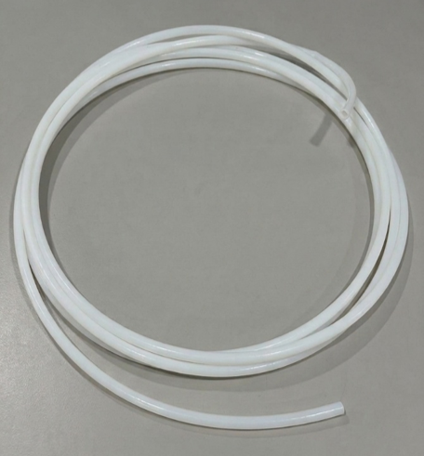
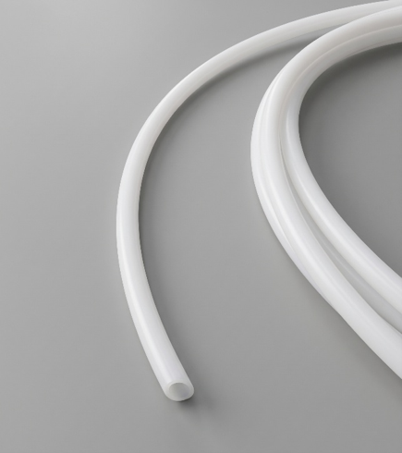
At the simplest level, a tube can be used to represent a narrow internal channel. Polytetrafluoroethylene (PTFE) tubing is one example of a material that can be used to create a consistent test model. Tubes can be selected with defined dimensions and contaminated with an appropriate test soil before being subjected to the cleaning process. The inner diameter of the PTFE tubing can be selected based on the intended application, ranging from small diameters of approximately 1 mm to 8 mm.
PTFE tube with inner diameter of 6 mm
Endoscope “Blocks” and The Surrogate Device
A simple tube cannot reproduce all the features of a flexible endoscope. Endoscopes can contain multiple channels with different dimensions and configurations, as well as connections and other areas that can present cleaning challenges. This is where more complex standardized models can be useful.
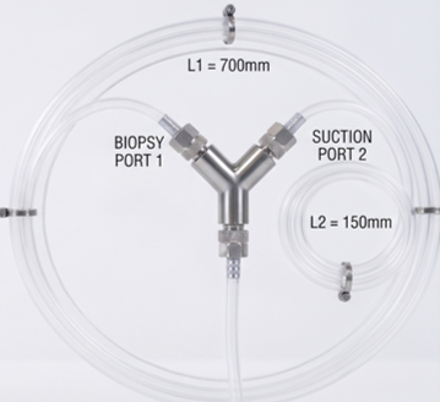
ISO 15883-4 describes standardized channel configurations that can be represented using test blocks. These blocks can be combined with appropriate connectors and components to create a surrogate device representing the relevant channel configuration of an endoscope.
The surrogate device therefore provides a more representative challenge than a single tube, while still allowing the laboratory to perform testing under controlled and reproducible conditions.
Surrogate device: Endoscope Block E
The Challenge: Choosing the Right Test Soil
One of the key parts of cleaning efficacy testing is the use of a test soil.
Test soils are designed to represent the types of contamination that medical devices may encounter during clinical use. Depending on the application, they can contain components such as proteins, lipids, carbohydrates, and other materials.
The previous technical specification, ISO/TS 15883-5:2005, included a collection of different test soils used in various countries.
The 2021 edition takes a different approach. Now, the manufacturer or laboratory needs to justify why the selected soil and soiling method are appropriate for the intended application. The choice should be supported by relevant clinical information and should meet the performance requirements described in ISO 15883-5: 2021.
Inside the Lab: An Example of a Test Soil
What does a clinically relevant and challenging test soil actually look like? Let’s look at one of the test soils; the Pseudomonas aeruginosa biofilm.
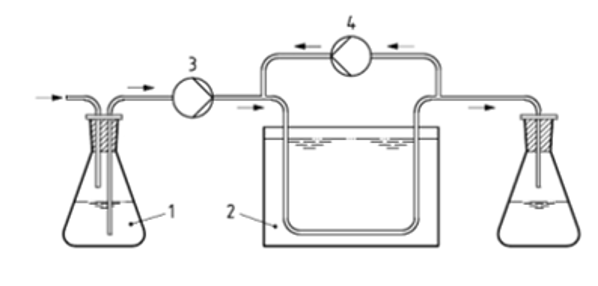
In this test, a mature biofilm is developed in the laboratory under controlled conditions. A bacterial suspension is continuously circulated through Polytetrafluoroethylene (PTFE) tubing with an inner diameter of 6 mm, for several days to allow the biofilm to develop.
Test equipment for biofilm formation
The contaminated tubing is then connected to the washer-disinfector’s internal irrigation system and processed through a complete cycle. After the cycle, the tubing is examined to determine the amount of residual protein and carbohydrate remaining.
The results are then compared with specified acceptance criteria to determine if the cleaning process succeeded.
Defining Success: Alert vs. Action Levels
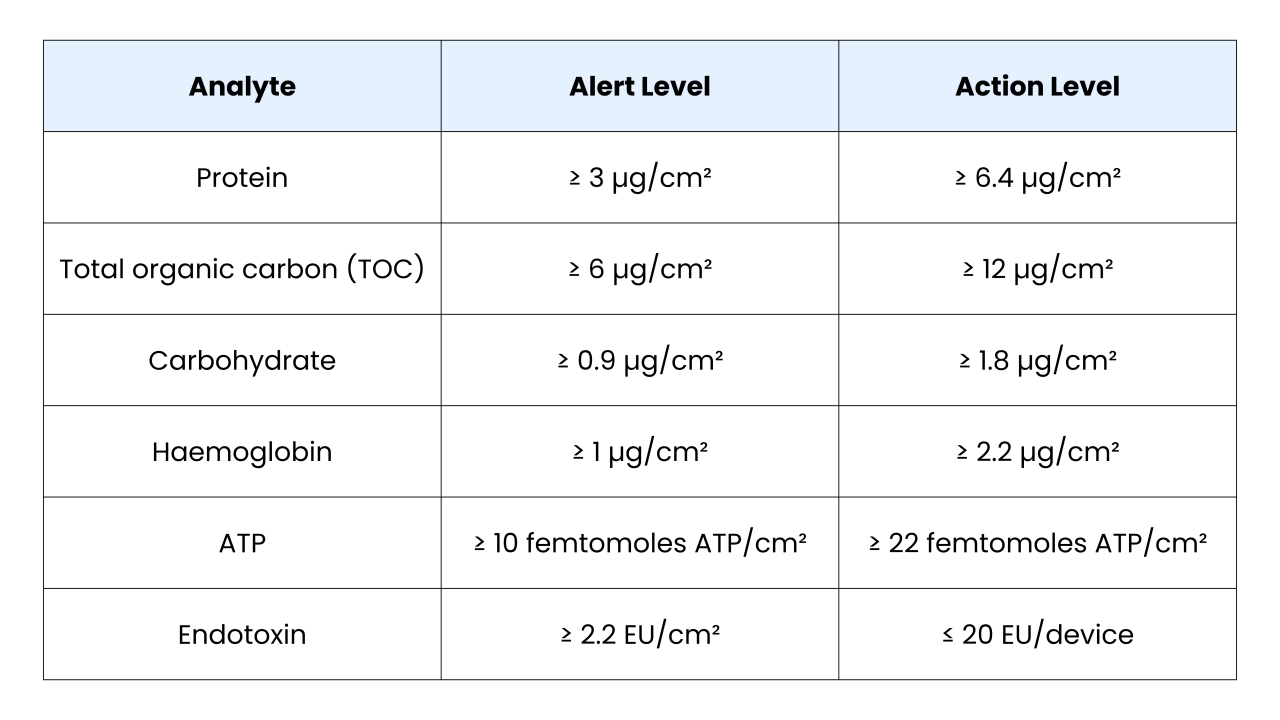
But how exactly is that success measured? ISO 15883-5:2021 also provides a framework for evaluating quantitative cleaning results. Two levels are particularly important;
Alert level: The preferred target for cleaning performance. Results below this level indicate that the process is performing well.
Action level: The maximum acceptable level of residual contamination. Results above this level indicate that the cleaning process does not meet the required acceptance criteria.
The acceptance criteria for the different cleaning parameters are shown in the table below:
This approach gives manufacturers and healthcare facilities a more meaningful way to monitor cleaning performance. Rather than treating cleaning as simply “clean” or “dirty,” the results can be assessed against defined criteria.
An Important Limitation: The Result Is Process-Specific
A result obtained using one washer-disinfector, its accessories and its defined process should not automatically be assumed to apply to a different washer-disinfector. Differences in factors such as flow, pressure, channel irrigation, chemical dosing, temperature, cycle time and connections can influence cleaning performance.
This can create a practical challenge when evaluating a manufacturer’s cleaning process. Ideally, the relevant washer-disinfector and its accessories should be available for the validation study. However, this may not always be practical, particularly when the equipment is large, installed at a customer’s site, or not readily available for laboratory testing.
The Solution: Validating the Manual Cleaning Process
So, what can be done when the machine cannot be brought to the laboratory?
In such situations, the scope of the study needs to be clearly defined. A surrogate model can still be useful for investigating or validating a specific manual cleaning procedure, provided that the model, contamination challenge, cleaning procedure and acceptance criteria are appropriately justified.
But the results should not be presented as direct validation of an automated washer-disinfector that was not actually tested. This distinction is important: The test model can be transferable, but the cleaning-process performance is not automatically transferable from one washer-disinfector to another.
Need ISO 15883 Testing and Validation?
At Tecolab, we provide testing and validation services related to ISO 15883-4 and ISO 15883-5. Our laboratory uses standard-compliant test method to provide objective data on cleaning and process performance.
If you are developing, validating, or revalidating a washer-disinfector or automated endoscope reprocessor, our testing team can help you determine the appropriate validation approach.
References:
EN ISO 15883-4:2018(E) – Washer-disinfectors – Part 4: Requirements and tests for washer-disinfectors employing chemical disinfection for thermolabile endoscopes.
ISO/TS 15883-5:2005(E) – Washer -disinfectors – Part 5: test soils and methods for demonstrating cleaning efficacy
EN ISO 15883-5:2021:E – Washer-disinfectors – Part 5: Performance requirements and test method criteria for demonstrating cleaning efficacy
Glasbey, T. (2025, June 10). A brief review of ISO 15883-5:2021 and cleaning validation acceptance criteria.


 Deutsch
 中文
中文
 日本語
日本語
 Português
 Français
 Español
 العربية