Cytotoxic Test ISO 10993-5Cytotoxic Test ISO 10993-5
Assess the cytotoxicity of your medical devices, biocides, chemicals or cosmetics through in-vitro models.
Cytotoxic Test is conducted using the MTT assay, a colorimetric method that measures cellular metabolic activity as an indicator of cell viability, proliferation, and cytotoxicity. This test is widely used to evaluate the in-vitro biocompatibility of medical device materials using cultured mammalian cells. The method can also be applied to assess the cytotoxic potential of biocides, chemicals, cosmetics, and other consumer products.
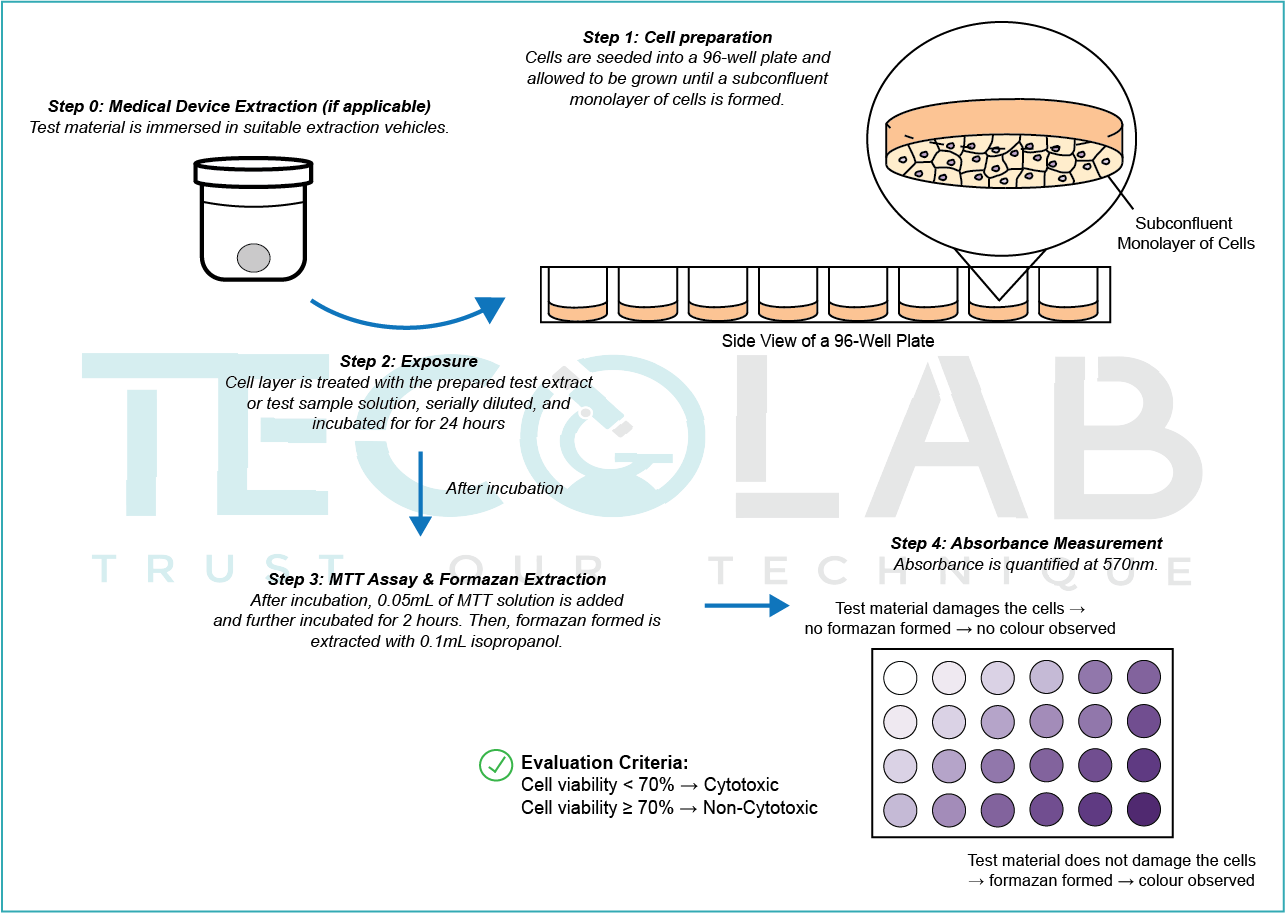
The diagram below provides a summary of the test method according to ISO 10993-5.
Cytotoxicity testing can be performed using either extracts of the test sample, which is the most common method for medical devices, or direct or indirect contact of the test material with the cell monolayer when extraction is not suitable.
For standard extraction, the test material is extracted according to ISO 10993-12 at 37°C for 24 hours using suitable polar and non-polar extraction vehicles separately. Polar vehicles may include 0.9% sodium chloride solution or MEM with serum, while non-polar vehicles may include sesame oil or cottonseed oil. For short-term contact devices (≤24 hours of exposure), extraction times may range from 4 to 24 hours, based on risk assessment.
Test Protocol
Step 1: If applicable, the test material is immersed in suitable extraction vehicles.
Step 2: Cells are seeded into a 96-well plate and allowed to grow until a sub-confluent monolayer of cells is formed.
Step 3: The cell layer is treated with the prepared test extract or test sample solution at different concentrations through serial dilution and incubated for 24 hours.
Step 4: After incubation, 0.05 mL of MTT solution is added, followed by a further 2-hour incubation. The formazan formed is then extracted using 0.1 mL of isopropanol.
Step 5: Absorbance is measured at 570 nm to determine cell viability.
Exposure Conditions
A minimum of four concentrations of the test sample or extract, including the undiluted extract, are applied to sub-confluent monolayers of a suitable cell line, commonly L929 mouse fibroblasts, and incubated for 24 hours.
Cell viability is calculated as a percentage relative to the untreated negative control.
Passing Criteria
If cell viability is below 70%, the material is classified as cytotoxic. If cell viability is 70% or above, the material is classified as non-cytotoxic.
Further Assessment
If the results indicate that the product is cytotoxic, further biocompatibility assessments may be considered based on the product’s intended use and risk assessment. These may include in vitro skin irritation testing according to ISO 10993-23 or OECD Test Guideline 439, where applicable.
**Disclaimer: NO ANIMAL TESTING. TECOLAB is committed to ethical and cruelty-free testing practices. We do not conduct any form of testing on animals and all our biocompatibility tests are performed on in-vitro models.
Need help with your testing requirements?
Have questions about this test method or your product? Our technical team is here to assist you.


 Deutsch
 中文
 日本語
 Português
 Français
 Español
 العربية