
 Deutsch
 中文
中文
 日本語
日本語
 Português
 Français
 Español
 العربية

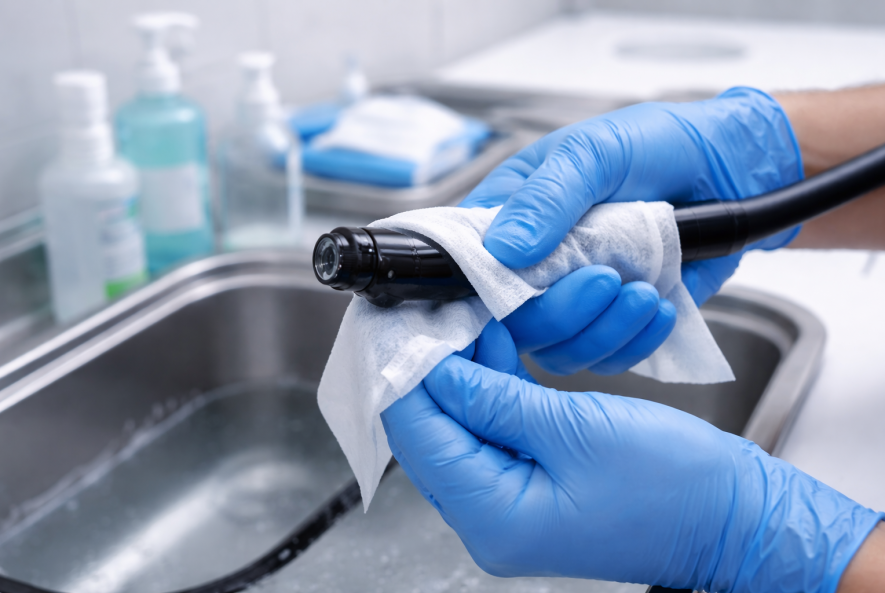
For many organizations, the journey to EU MDR compliance can feel like navigating a regulatory maze – especially for disinfectant medical devices, where classification and regulatory requirements can often be unclear. Understanding where to begin, how to structure documentation, and what regulators expect can make a significant difference.
The regulatory pathway for disinfectant medical devices in Europe has become significantly more demanding under the EU Medical Device Regulation (EU) 2017/745 (MDR). Manufacturers pursuing CE marking are now subject to deeper scrutiny from regulators and Notified Bodies, particularly in areas such as classification strategy, technical documentation alignment, risk management integration, and lifecycle oversight. In this environment, establishing a clear and defensible regulatory strategy early in development is essential to minimize compliance risks and support a smoother conformity assessment process.
Disinfectants specifically intended for the cleaning, disinfection, or sterilization of medical devices are assessed within a stringent, risk-based regulatory framework due to their direct implications for patient safety. Products with broader or multipurpose disinfection claims – such as general surface disinfectants – may instead fall within the scope of the EU Biocidal Products Regulation (EU) 528/2012 (BPR) depending on their intended purpose.
The following key regulatory considerations are frequently examined during conformity assessments and should be evaluated when preparing disinfectant medical devices for the EU market.
1.Intended Purpose and Classification Strategy
Under the EU MDR, device classification is driven by intended purpose and risk profile. The specific wording used in labelling and instructions for use plays a decisive role in determining whether a disinfectant is classified as Class IIa or Class IIb.
This classification framework applies once a product is determined to fall within the scope of the MDR as a medical device.
Imprecise or overly broad claims often lead to elevated classification or increased Notified Body scrutiny. Defining a clear, clinically aligned intended purpose at the earliest stage is therefore critical to maintaining regulatory predictability.
2.Determining the Appropriate Regulatory Pathway: MDR or BPR
Disinfectant products frequently present borderline challenges, particularly where product claims and mode of action may fall within the scope of both the EU Medical Device Regulation (EU) 2017/745 (MDR) and the EU Biocidal Products Regulation (EU) 528/2012 (BPR). Determining whether a disinfectant qualifies as a medical device under the MDR depends primarily on its intended medical purpose and the mechanism by which it achieves its claimed effect.
Where claims relate directly to a medical purpose – such as the cleaning, disinfection, or sterilization of medical devices – the product may fall under the MDR. Conversely, products intended for general disinfection without a specific medical objective may fall within the BPR framework. In certain cases, such as surface disinfectants intended for use on both medical devices and general hospital surfaces, the product may fall under the scope of both regulations, and dual compliance or registration under both MDR and BPR may be required.
Failure to conduct a structured borderline assessment at an early stage can result in regulatory pathway misalignment, duplicated testing, delayed conformity assessment, or significant market entry setbacks.
The table below highlights key regulatory differences between disinfectant products regulated under the MDR and those falling within the scope of the BPR.
|
Aspect |
MDR (EU 2017/745) |
BPR (EU 528/2012) |
|
Primary Purpose |
Regulates medical devices intended for diagnosis, prevention, monitoring, treatment, or alleviation of disease. |
Regulates biocidal products intended to control harmful organisms such as bacteria, viruses, and fungi. |
|
Key Determining Factor |
Product has a specific medical purpose. |
Product performs a biocidal function without a direct medical objective. |
|
Typical Applications |
Products intended for the cleaning, disinfection, or sterilization of medical devices |
General hygiene or environmental disinfection, such as household or industrial surface disinfectants. |
|
Regulatory Assessment |
Conformity assessment conducted by Notified Bodies. |
Authorization handled by national competent authorities or ECHA. |
|
Evidence Requirements |
Requires technical documentation, clinical evaluation, risk management, and PMS. |
Requires active substance approval, efficacy testing, and toxicological/environmental assessment. |
|
Market Access Requirement |
CE marking under MDR |
Biocidal product authorization under BPR |
3.Technical Documentation Integration
Under the EU MDR, technical documentation must demonstrate structured and defensible alignment across all regulatory elements.
Notified Bodies no longer assess individual reports in isolation. Instead, they examine whether the Technical Documentation presents a coherent and internally consistent regulatory narrative. Gaps or contradictions between sections often trigger requests for clarification, which can prolong the conformity assessment process. Consequently, documentation integration is now as decisive as the underlying data itself.
Some of the key elements of the Technical Documentation (Technical File) for disinfectant medical devices include:
- Device Description and Specification
- Intended Use and Labelling
- GSPR Checklist
- Risk Management
- Performance and Efficacy Data
- Clinical Evaluation
- Post-Market Surveillance
4.Risk Management Considerations
Risk management for disinfectant medical devices should not be limited to chemical composition or formulation safety alone. A structured evaluation should address factors such as user exposure, foreseeable misuse, residual activity or toxicity, and product stability under defined storage and use conditions.
Under the MDR, risk management must be fully integrated within the Technical Documentation, with clear traceability between identified hazards, implemented risk control measures, and supporting performance or safety evidence. Inadequate linkage between these elements commonly results in regulatory queries and extended review timelines.
5.Clinical Evaluation and Post-Market Surveillance
Even for chemical-based medical devices such as disinfectants, a structured and well-documented clinical evaluation is required under the MDR to demonstrate safety and performance. This extends beyond laboratory efficacy data alone and requires a comprehensive review of relevant clinical literature, state-of-the-art considerations, and a justified linkage between available evidence and the product’s intended purpose.
Under the MDR, all medical devices require a structured post-market surveillance (PMS) system to monitor product performance and safety aftermarket placement. For Class IIa and IIb disinfectant medical devices, manufacturers must also prepare and maintain Periodic Safety Update Reports (PSURs) in accordance with Article 86.
A proactive approach to clinical evaluation and post-market monitoring is essential to sustain compliance and withstand regulatory scrutiny throughout the product lifecycle.
Conclusion
CE marking disinfectant medical devices under the EU MDR is no longer a documentation exercise – it is a comprehensive regulatory undertaking that demands clarity, structure, and defensible decision-making. From classification rationale to Technical File integrity, from integrated risk management to substantiated clinical evaluation and lifecycle surveillance, every element must withstand regulatory scrutiny.
In an environment of increasing oversight and heightened Notified Body expectations, regulatory preparedness is no longer optional – it is a decisive factor in achieving efficient conformity assessment outcomes. Manufacturers who invest in structured compliance planning strengthen both approval predictability and long-term market stability.
Still figuring out your EU MDR pathway?
TECOLAB is ready to guide you.
We help organizations transform regulatory complexity into clear, defensible compliance strategies for disinfectant medical devices.
Contact us today and start building your path to successful CE marking